Simmer Pot Recipes for Kitchen Witchery
Simmer pot recipes are the softest possible entry into kitchen magic: a pot of water, slices of fruit, a few whole spices, low heat, and the room slowly changing around you.
Simmer pot recipes by season
These recipes loosely follow the sabbats, because that is the rhythm most kitchen witches lean on. Each one is a single pot of water on low heat, watched, with rough measurements so you are not guessing at "a handful."
| Season | Sabbat anchor | Core ingredients | Intention | Best for |
|---|---|---|---|---|
| Autumn | Samhain | Apple, orange, cinnamon, cloves, star anise, sage, bay | Abundance, ancestor work, protection | The week of Halloween, grief-soft evenings |
| Winter | Yule | Orange, cranberry, pine or cedar, rosemary, cinnamon, cloves | Resilience, returning light, comfort | The dark stretch from December through February |
| Spring | Ostara | Lemon, lime, mint, lavender, rosemary, ginger | Cleansing, fresh starts | Spring cleaning, after a hard chapter |
| Summer | Litha | Lemon, mint, summer berries, lavender | Vitality, joy, peak light | Bright mornings, open-window days |
This is folk magic, not aromatherapy and not medicine. The meanings are traditional, the way practitioners use them, not health claims. If you have a real symptom, please see a doctor; the pot is for the atmosphere of the room.
Autumn harvest pot (Samhain, ancestors, abundance)
This is the recipe most people meet first, and it earns the reputation. The smell alone collapses the distance between you and every autumn you have ever lived.
- 8 cups water
- 1 sliced apple
- 1 sliced orange
- 3 to 5 cinnamon sticks
- 1 tbsp whole cloves
- 1 tbsp star anise
- 1 sprig fresh sage
- 1 inscribed bay leaf (last)
- Optional: a splash of vanilla, a dash of nutmeg
Bring the water to a gentle boil, then drop to a low simmer. Add the sage first; in practitioner language, sage clears whatever has gone stagnant in the room since summer.
Apple goes next for the Otherworld and the ancestors (apples have carried that association across a long stretch of European folklore). Orange slices are read as harvest coin, the gold of the season. Cinnamon and star anise are warmth and fortune, traditionally a "speed it up" pairing.
Stir clockwise as you add. Last, drop in the bay leaf you have already written your intention on. Murmur whatever feels true to you over the pot; mine is usually some version of "thank you for the year, please carry the rest."
If you want the wider ritual context, the Samhain guide sets the altar and the night around it.
Winter comfort pot (Yule, resilience, returning light)
Winter is when I rely on simmer pots the most, partly for the smell and partly because the act of standing at a warm stove in a dark kitchen does something a candle cannot.
- 4 to 6 cups water
- 1 sliced orange
- ½ cup fresh cranberries
- 1 to 2 pine or cedar sprigs
- 1 sprig fresh rosemary
- 5 to 7 cinnamon sticks
- 1 tbsp whole cloves
The evergreens are the load-bearing piece. Pine and cedar are read as endurance, the trees that stayed green while everything else went bare; bringing a clipping from the Yule tree into the pot is a quiet way of asking for the same.
Cranberries are vitality and gratitude for what you survived. Rosemary is protective cleansing. The orange is the returning sun, dropped into the darkest corner of the house in scent form.
This is also the pot I lean on during high-stress family stretches around the December holidays; the warmth and the citrus together cut the brittle feeling out of a closed-up house faster than anything else I have tried. The Yule guide holds the ritual side of the solstice if you want it.
Spring cleansing pot (Ostara, refreshment, new starts)
After a winter of heavy spices, this one feels like opening a window with your nose.
- Pot 2/3 full of water
- 1 sliced lemon
- 3 sliced limes
- A handful of fresh mint leaves
- 2 tbsp lavender buds
- 5 sprigs fresh rosemary or thyme
- 1-inch piece of fresh ginger, sliced
Lemon and lime do the heavy lifting; in folk practice citrus is the cutter, the thing that gets through stagnant energy the way it gets through grease. Mint is clarity. Lavender softens the edges of the cleanse so the room does not feel scoured, only fresh.
The way to run this one is alongside actual scrubbing. The pot is the final polish, not a substitute for opening the windows and mopping the floor. If you want the bigger version of that ritual, the home cleansing guide walks the whole circuit; the Ostara guide holds the equinox framing.
Summer joy pot (Litha, vitality, peak light)
The summer pot is the spring pot with the heavier roots swapped out. Same lemon, same mint, same lavender. Drop the ginger; add a handful of summer berries (strawberry, raspberry, blackberry, whatever is in the fridge), or a splash of coconut water for a sweeter base.
Treat it as a daytime pot, windows wide, short simmer. The intention is solar: warmth, abundance of light, the simple animal pleasure of being alive in long days. The Litha guide sets the solstice context.
Everyday and specialized blends
You do not need a sabbat to make one. Three small pots I come back to year-round.
The all-purpose hearth pot
- 1 sliced lemon
- 3 cinnamon sticks
- 5 sprigs fresh rosemary
- 1 tbsp black peppercorns
- 1 tbsp cloves
- 5 bay leaves
If you only ever learn one recipe, this is it. It smells warm and clean, the meaning is "general blessing on the house," and it works in any season. The five bay leaves are an invitation to write five small intentions, one per leaf.
Morning coffee simmer
A handful of whole coffee beans, a splash of vanilla extract, and a few strips of orange peel. It smells like the best version of a café and reads, energetically, as a wake-up for the room.
Keep this one short, twenty to thirty minutes maximum. The coffee turns bitter if you push it longer, and burnt coffee is a smell that lives in soft furnishings for days.
Clarity and clear-air pot
Eucalyptus, two or three drops of peppermint essential oil (sparingly, and skip entirely if you have a cat or a small dog; see the safety section), and lemon slices.
It is fragrance, not a treatment. It supports how you feel in the room, not your sinuses in a medical sense. If something is actually wrong with your breathing, that is a doctor call.
How to actually make one, step by step
- Pick the vessel. A heavy-bottomed saucepan, an enamelled Dutch oven, or a ceramic slow cooker. Avoid thin aluminium; acidic ingredients like citrus and cranberry will pull metallic notes into the steam and the pot.
- Fill it 2/3 full with water, roughly 4 to 6 cups depending on size. This is the moment to use moon water or collected rain if you have it.
- Bring to a gentle boil, not a rolling one.
- Add ingredients one at a time, and name each one's purpose out loud as you go. "With this rosemary, protection." It feels self-conscious for the first minute, then it does not.
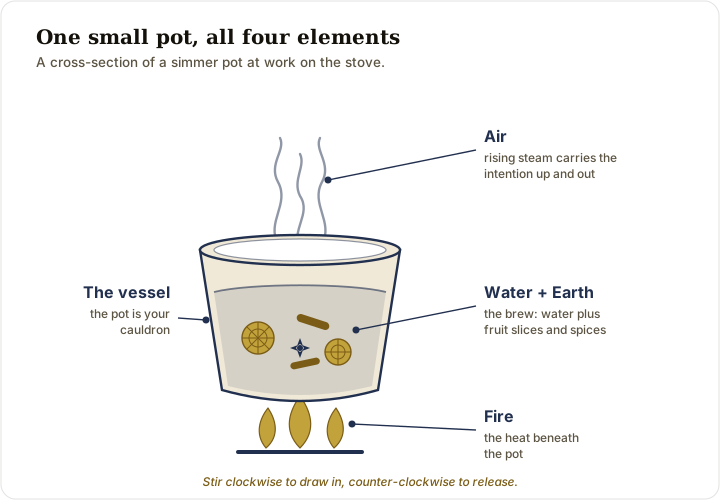
- Stir clockwise to draw something in, counterclockwise to release something. The inscribed bay leaf goes in last.
- Drop the heat to the lowest simmer the burner allows. You want barely-moving water, not bubbles.
- Set a 30 to 60 minute timer. Come back, look, top up the water. Stay in the house. Ideally, stay in the kitchen.
The water you use matters
Tap water is fine and the spell still works. The water is the carrier; what you do with intention is what changes it.
If you want to layer extra symbolism in, the common upgrades are:
- Moon water charged under a specific phase, for emotion, intuition, and cycles. Full moon for amplification, new moon for fresh starts.
- Rainwater for gentle renewal and the softer face of nature.
- Storm water for force, for spells where you need a push behind them.
- Snowmelt for slow, quiet shifts.
If "how do I make moon water" is the next question, the full moon water guide walks the whole process.
The bay leaf method: writing a wish into the pot
Bay is the leaf you write on. The surface is broad and smooth enough to take a marker, and the historical thread is long: the bay laurel was sacred to Apollo, the wreath of victory, the leaf of granted wishes. Modern practitioners use it as a tiny, disposable petition slip.
The method:
- Take a dried bay leaf. Permanent marker or fine pen.
- Write the intention as one word or a short phrase. "Peace." "Rent." "Patience with my mother." If you draw rather than write, this is the place for a sigil or a bindrune.
- Whisper the intention once over the leaf.
- Drop it into the simmering pot last, after every other ingredient is in.
As the pot works, the leaf softens and breaks down. In the symbolic language practitioners use, this is release, not destruction; the written wish dissolves into the water and lifts out as steam.
This is the part most baby witches feel something during, and I think a chunk of that is because writing the wish forces you to name it.
You cannot fit "I want my whole life to be different" on a bay leaf. You have to pick the one true word. That clarifying act is most of the work.
The same bay-leaf logic shows up outside a simmer pot, too; the burn-and-release version and the jar version live in the broader beginner spells page.
Common ingredients and what kitchen witches mean by them
A short reference scoped to what actually goes in a simmer pot, not a full pantry. These meanings are folkloric, the way practitioners use them, not health claims.
| Ingredient | Element / season | Traditional intention | Notes |
|---|---|---|---|
| Cinnamon | Fire, autumn | Prosperity, speeds a spell along | Long use in Hoodoo for drawing business; warms a room spiritually |
| Cloves | Fire, autumn | Protection, warding gossip | Sharp; a little goes far |
| Lemon | Water, spring | Purification, cutting stagnant energy | The cleanser |
| Orange | Fire, autumn or winter | Joy, solar warmth, attraction | Read as harvest coin |
| Rosemary | Fire, year-round | Psychic protection, remembrance | The energetic disinfectant |
| Star anise | Fire, autumn | Good fortune, opening psychic senses | The shape is part of the charm |
| Cranberries | Water, winter | Vitality, gratitude | Pairs with pine |
| Apples | Water, autumn | Otherworld, ancestors, rebirth | Slice across the equator to show the pentacle in the core |
| Bay leaf | Fire, year-round | Wishes, victory | The inscription canvas |
| Mint | Air, spring | Refreshment, clarity | Goes well with citrus |
| Lavender | Air, spring | Peace, emotional balance | Soothes the edges of a cleanse |
For the full witch-pantry (anything you might dry, jar, or burn rather than simmer), the herb correspondences chart is the deeper reference. For stones to set near the burner (never in the pot itself, the heat is bad for most of them), crystal correspondences has the list.
Stovetop vs slow cooker
These are the two ways to run a simmer pot, and they trade focus for freedom. Stovetop is the focused method, where you stand near the pot and the ritual happens because you are present with it; the fire risk is real and the timer is short. The slow cooker is the background-hum method, where the pot keeps working while you work in the next room; the fire risk is lower but it is not zero.
| Feature | Stovetop | Slow cooker |
|---|---|---|
| Heat | Low simmer, adjustable | Low or High thermostat |
| Safe duration | 2 to 4 hrs supervised | 4 to 8+ hrs |
| Refill cadence | Every 30 to 60 min | Every few hours |
| Fire risk | High if forgotten | Lower, not zero |
| Best for | Active ritual you stay with | Ambient energy through the day |
If you are home and present, the stovetop is the better magical experience; the act of returning to stir is itself the spell. If you are working from home and want the house to hum at a low intention all day, the slow cooker is the answer.
Safety
Never unattended on the stove
The single failure mode of a stovetop simmer pot is boiling dry. The water evaporates, the fruit and herbs scorch onto the metal, the house fills with a bitter, eye-watering smoke, and the pot becomes a fire hazard. I have done it once. I will not do it twice.
If you cannot stay in the house, turn the burner off. If you cannot stay in the kitchen but you can stay in the house, set a phone timer for 20 minutes and come back. If you want the pot working in the background while you do other things, move to the slow cooker.
Pets, ventilation, and essential oils
Vaporised cinnamon, citrus oils, and especially added essential oils can irritate or be outright toxic to cats and dogs in a closed room. Cats are the more sensitive of the two; their livers do not process certain plant compounds the way ours do.
If you live with pets:
- Skip the essential oils. The whole spices and fresh herbs are gentler.
- Crack a window or two. Cross-ventilation matters.
- Lean on the milder ingredients (apple, cranberry, rosemary, citrus peel rather than oil).
- Watch your animals. If a pet seems off after a long simmer, that is a vet call, not a witchcraft call.
Slow cooker setup
If you go the slow-cooker route, the placement matters as much as the recipe.
- Sit it on a heat-proof surface (granite, tile, or a trivet on wood).
- At least 6 inches from walls and wooden cabinets, to let radiant heat dissipate.
- Keep the basin at least 1/3 to 3/4 full of water at all times.
- Tuck the cord well away from counter edges and away from any water spill.
Some practitioners keep a dedicated slow cooker for ritual work only, to keep mundane food separate from magical brews. That is genuinely a lovely practice if you have the cupboard space and the spare cooker; it is not required to do this well.
When the spell is done: disposal and reuse
A simmer pot is not a one-shot. You can re-simmer the same brew for two or three days if you cool it and store it in the fridge between uses; the scent fades each time, and most practitioners read the magic as fading with it. By day three you are mostly making lightly fragrant water.
Do not eat the brew. Even if every ingredient started edible, the long simmer concentrates bitter compounds, and the working is for the air, not the stomach.
The traditional close: drain the liquid down the sink, and compost the solids back into the earth as a small thank-you to the plants that did the work. If you do not have a compost setup, burying the solids in a garden bed or a planter works; if you have neither, wrap them and bin them without ceremony. The intention completed when the steam rose. The disposal is a courtesy, not the spell.
What a simmer pot actually is
A simmer pot is a low pot of water with sliced fruit, whole spices, and herbs gently steaming on the stove; in kitchen witchery, each ingredient carries a folkloric meaning, and the rising steam is treated as the spell traveling through the home.
The first time I made one was an orange peel left from breakfast, a cinnamon stick from a jar that had been in the cupboard for two years, and tap water. Twenty minutes in, the kitchen smelled like a season I could not name, and I noticed I had unclenched my shoulders without meaning to. That is the part the recipes do not put in the ingredient list, and it is the whole point.
The secular version of this is called stovetop potpourri. The witch version uses the same pot, the same ingredients, and the same heat, and adds one thing: intention. You name what you want as you add each ingredient, you stir with direction, and you treat the steam as the working leaving the pot and settling into the rooms.
Most practitioners frame the pot as a tiny meeting of the four elements. Fire is the burner. Water is the pot. Earth is the botanicals. Air is the steam that lifts the intention out and through the house.
The pot itself stands in for the cauldron, which in folk-magic language is a vessel of transformation, the place a raw thing becomes a finished one.
Set a pot on the stove, name what you wish to welcome, and let the warm steam carry the intention through your home.
Keep exploring
Browse more guides, or start with the basics of the practice you are curious about.
Browse more guides