Incense for witchcraft is botanical smoke and infused oil used as ritual tools, with smoke meant to shift the energy of a room and carry intent, and oils meant to anchor that intent into a candle, an object, or your own skin. You do not need white sage, you do not need a $40 boutique blend, and a stick of grocery-store frankincense plus a small bottle of olive oil is enough to begin. The aromatics are treated, in this practice, as a vibrational language rather than as aromatherapy or medicine, and the safety and the ethics matter as much as the scent.
Incense and Oils in Witchcraft, in One Breath
Incense modifies the atmosphere; oils anchor intent into matter. Both lean on what occultists call sympathetic magic, the old idea that like influences like, the way one tuning fork hums when its twin is struck across the room.
Two living traditions show up most often. Eclectic and Wiccan-flavored practice tends to think in resin blends and elemental correspondences, where the rising smoke is read as prayer ascending. Hoodoo and rootwork, an African American folk-magic system with its own lineage and protocols, work heavily in condition oils, also called conjure or dressing oils, mixed to address a specific situation (money, love, a court case, a stuck door).
Across both, the working rule is the same: the oil dresses the candle, the smoke clears the room, and you still send the email. More on the underlying mechanism in how spells work.
Combustible vs. Non-Combustible Incense
The first fork in the kit is whether the incense burns on its own or whether it needs a heat source. The answer changes what you buy and what you set up.
| Feature | Combustible (sticks, cones) | Non-combustible (resins, loose herbs) |
|---|---|---|
| Definition | Burns independently once lit. | Raw material that needs an external heat source to release smoke. |
| Base and binders | Wood-powder base plus a binder like makko or guar gum. | Zero binders. The plant or resin alone. |
| Tools needed | A simple ash-catcher tray. | Heat-proof censer or cauldron, sand or salt, charcoal disc, metal tongs. |
| Typical use | Daily practice, ambient shifts, a quick clear before bed. | Ceremonial work, custom blends, intense purification, full-altar rituals. |
Combustible incense is fine. The drugstore-aisle stick lit before a tarot pull is real practice, not a lesser one. Loose resin on charcoal is where the craft deepens, not where it has to start. Resins are sometimes called the "blood of the tree" by practitioners, which is part of why they carry weight in formal work.
A Working Lexicon of Resins
These intentions are traditional correspondences, the way a particular plant has been used for spiritual work, not claims about what the plant does to a body. Each entry names the planet and element it is commonly aligned with, what witches reach for it to do, and an honest note from working with the material.
Frankincense (Boswellia sacra)
Sun, Fire. The universal cleanser. Reached for to purify a space, lift the energy of a ritual, drive off whatever felt heavy in a room, and steady the mind before meditation or vision work. If you only ever own one resin, this is the one. Pale yellow tears, citrus-and-pine smoke, the kind of scent that quietly redraws a room.
Myrrh (Commiphora myrrha)
Lunar and earthy, set as the counterweight to frankincense. Used for protection, healing, ancestor and afterlife work, and breaking hexes. Pairs with frankincense the way salt pairs with bread; the smoke is heavier, sweeter, faintly bitter, and it tends to slow a room down.
Dragon's Blood (Daemonorops draco or Dracaena cinnabari)
The amplifier. Pinched into another blend it is treated as rocket fuel; burned alone it is fiercely protective and banishing. Crimson, sticky, a little dramatic. A small pinch goes a long way, which is good, because premium pricing on the genuine resin is real.
Sandalwood (Santalum album or red Pterocarpus)
Focus, astral projection, divine alignment. Used as a refined base in many blends and as a pre-divination clearer of the head. If your shuffles feel scrambled, a few minutes of sandalwood smoke before the cards is the classic move. Deeper divination prep at divination basics.
Benzoin (Styrax benzoin)
Peace, emotional balance, prosperity. The softener in a blend; it harmonizes more aggressive resins. Vanilla-adjacent and sweet, the resin that makes a Dragon's Blood mix smell less like a furnace and more like a temple.
The wider herbal meaning chart, including non-resin herbs and planetary days, lives at herb correspondences.
How to Burn a Resin on Charcoal
The mechanics matter, because charcoal discs ignite quickly and run very hot. Walk this slowly the first time.
- Prep the vessel. A heavy heat-proof censer, a small cast-iron cauldron, or a thick ceramic bowl, filled with at least two inches of sand or sea salt. The sand is thermal insulation. Without it the vessel scorches an altar cloth or cracks.
- Ignite with tongs. Never bare fingers. Grip the edge of the disc with metal tongs or sturdy tweezers and hold a flame to the bottom until the disc sparks. The saltpeter inside cascades a sharp, almost gunpowder hiss across the surface.
- Settle the disc onto the sand bed, sparking side up.
- Wait five to fifteen minutes. The disc has to stop crackling and develop a layer of pale gray ash. Dropping resin onto a black, still-igniting disc smothers it and scorches the botanical, and you get bitter smoke instead of incense.
- Apply a small pinch to the glowing center with a spoon or tweezers. The resin softens, blooms, and the first wave of real aromatic smoke comes up. That bloom is the moment that tends to hook people.
Open a window before you light. The full pet and respiratory rules are not optional. The rest of the censer-and-bowl setup is covered in witch tools and altar basics.
Anointing Oils: Carriers, Condition Oils, and How to Use Them
An anointing oil has three layers. The carrier oil, usually fractionated coconut, jojoba, sweet almond, or plain olive oil, is the body of the mixture. The essential or infused herbal component carries the intent: a few drops of essential oil, or herbs steeped into the carrier the slow way. Curios are the small sympathetic anchors some practitioners add (a tiny lodestone chip in a money oil, a pinch of pyrite, a single peppercorn in a fiery banishing blend).
Pulse points are where daily anointing tends to land: wrists, temples, behind the ears, the soft spot at the solar plexus. The frame is that, over time, the same oil applied to the same points conditions the practitioner's energy and the subconscious toward whatever it was mixed for. A small daily ritual, not a single grand gesture.
Condition oils have a specific lineage. They come out of Hoodoo and rootwork, an African American folk-magic system with its own protocols, vocabulary, and history. You can buy them and you can work with them, and it is worth naming the source while you do.
Candle Dressing, Stroke by Stroke
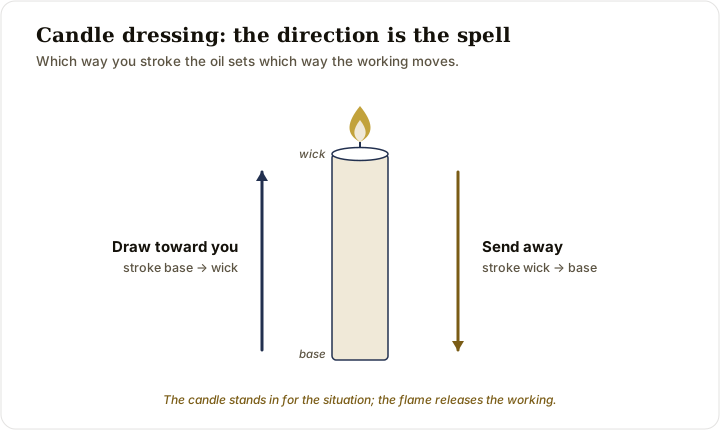
The whole technique is in the direction of your hand. Candle dressing treats the candle as a stand-in for the situation, the oil as programmable intent, and the flame as the engine that releases the working into the world.
- To draw something toward you. Dab oil on your fingers, grip the base of the candle, and stroke upward toward the wick in steady passes. The motion pulls the desired energy up and toward the self.
- To banish or repel. Reverse it. Stroke from the wick down to the base, pushing the unwanted influence away and into the ground.
A worked example for a prosperity candle. A solid green pillar, because green is the traditional color for wealth in this practice. A money-drawing oil, perhaps mint and patchouli infused into a fractionated coconut carrier. Dress the candle base-to-wick while picturing rent paid, work landing, the specific dollar figure that would lift the month. Roll the dressed candle in a small plate of crushed dried mint and thyme so the wax picks up the herbs. Carve a dollar sign, or the Fehu rune (the old wealth glyph), into the side with a clean point. Light it. Then submit the application you have been avoiding. The call that comes two days later belongs to both the working and the action; that pairing is how this tends to move.
Full candle spell anatomy, including color, timing, and release, at candle magic. Wax choice at wax types. The petition itself at writing a spell.
Smoke Cleansing vs. Smudging
"Smudging" is a closed Indigenous ceremony. What most witches do with a bundle of herbs and a match is smoke cleansing, also called fumigation or, in the British Isles tradition, saining. They are not interchangeable words, and using them as if they were is the line most newcomers cross without meaning to.
| Feature | Smudging | Smoke cleansing |
|---|---|---|
| Cultural origin | Specific Native American and First Nations communities. | Universal. Practiced across Celtic, European, Asian, and Middle Eastern traditions. |
| Access status | Closed. Belongs to the lineage; outsiders are invited in by an elder, not by themselves. | Open. Available cross-culturally to anyone honoring their own ancestral or local plants. |
| Typical botanicals | White sage (Salvia apiana), sweetgrass, cedar. | Rosemary, thyme, mint, European garden sage, pine, mugwort. |
| Core focus | A specific religious ceremony with prescribed prayers and cosmology. | The general use of botanical smoke to clear stagnant energy and bless a space. |
The history is part of why this matters. Indigenous peoples in the United States were legally barred from practicing their own religion, smudging included, until the American Indian Religious Freedom Act of 1978. Selling, gatekeeping, or trend-pinning a practice that people were arrested for performing inside living memory is the line we do not cross. Full deep-dive at closed practices.
White Sage: Why You Should Stop Buying It
Salvia apiana grows on the dry coastal slopes of Southern California and the northern strip of Baja California, Mexico, and nowhere else. It is the primary sacred medicine of several Native Californian smudging rites.
Global demand from "witch kit" marketing has driven aggressive illegal harvesting on public lands and nature preserves. The plant now sits on the At-Risk Species List maintained by United Plant Savers, a botanical conservation organization, because white sage does not bounce back from heavy disturbance and poachers tend to rip out entire root systems rather than trim leaves.
The retail loophole to watch is the word "wildcrafted." No commercial harvesting permits exist for white sage on U.S. public lands, so "wildcrafted white sage" is almost always poached, regardless of the language on the label. Unless white sage is genuinely your tradition, do not buy it. There is no aesthetic reason that justifies it.
When you are gathering anything yourself, see ethical wildcrafting.
Sustainable Alternatives That Actually Work
These are belief-framed correspondences, the traditional uses that practitioners have leaned on for centuries, not promises about outcomes.
- Rosemary. A kitchen-staple all-purpose cleanser. Many witches reach for rosemary the way others reach for sage, and a bundle of supermarket rosemary dried on a low oven makes a perfectly real cleansing bundle.
- Thyme (Thymus vulgaris). Aligned with Venus, water and air. Burned for courage, releasing grief, restful sleep, and drawing love.
- Lavender (Lavandula angustifolia). Mercury, air. Peace, happiness, and protection against the evil eye. The evil-eye thread continues at evil eye protection.
- Mint (Mentha spp.). Venus and Mars. Prosperity, resilience (the plant itself is famously hard to kill), and safe travel.
- Mugwort (Artemisia vulgaris). Moon, sometimes Artemis. The premier visionary herb of modern witchcraft, burned before divination, scrying, and dreamwork to amplify psychic sight; see divination methods and scrying.
- European garden sage, pine, cedar from your region. Local-land and ancestral options that aren't stripped from a desert ridge a thousand miles away.
The Sephora-priced "ritual kit" is a markup, not a requirement. The grocery aisle plus a bit of patience covers more of this than most beginners are told. Room-by-room work at cleansing your home; the formal frame at banishing ritual.
Pet Safety: Cats, Birds, and Flat-Faced Dogs
This is plain. There is no warm way to soften it.
Cats lack sufficient amounts of an enzyme called glucuronyl transferase, which is what mammal livers normally use to break down botanical compounds like phenols, ketones, and terpenes. Without it, essential oils accumulate in a cat's bloodstream rather than clearing. Tea tree, eucalyptus, peppermint, clove, citrus, and pine oils are the most acutely toxic, and exposure can cause ataxia, tremors, hypothermia, liver failure, and death. Do not diffuse essential oils in a home with a cat. Do not anoint your skin with them if a cat is going to climb on you.
Birds have hyper-efficient respiratory systems built around a network of tiny air sacs that pull airborne particles deep into the body extremely quickly. The same biology that makes them sing makes them devastatingly vulnerable to smoke. Even brief incense exposure can cause fatal bronchospasm in parrots and budgies. If you live with a bird, you do not burn anything in shared air. Full stop.
Brachycephalic dogs, the flat-faced breeds like pugs and French bulldogs, already have compromised airways; resinous incense smoke can trigger acute respiratory distress for them too.
Raw resin smoke is also dangerous, not just essential oils. The particulate is the problem. Resin smoke also leaves a sticky aromatic residue that settles into furniture and fur, and the cat then grooms and ingests it. The ASPCA Animal Poison Control center publishes guidance on essential oils and pets, and it is worth reading once if you live with any animal.
This is a felt-sense practice guide, not veterinary advice. If your pet has been exposed and shows symptoms, call a vet now.
The Ventilation and Dilution Rules
The human-safety twin of the pet-safety rules.
- Never ingest essential oils. They are lipophilic, meaning fat-soluble and water-repellent. Dropped into a drink or a brew they do not disperse; they float as concentrated caustic droplets that burn the mucous membranes of the mouth, throat, and stomach and tax the liver and kidneys.
- Never apply essential oils neat to skin. Undiluted contact carries a high risk of contact dermatitis, chemical burns, and permanent sensitization, after which even small exposures can trigger reactions for life.
- Dilute into a carrier oil. Jojoba, fractionated coconut, sweet almond, or plain olive. The Tisserand Institute, the standard reference for essential-oil safety, sets the everyday dilution at roughly one to three percent, which works out to about six drops of essential oil per ten milliliters of carrier. Caustic oils like clove bud and cinnamon bark stay under half a percent.
- Ventilate when you burn. Open windows. Keep sessions short, thirty to sixty minutes at the outside. Leave a clear exit route so any animal in the home can walk out of the room.
The oils support how you feel and what you are casting toward. They are not a diagnosis or a treatment, and if something physical is wrong, please see a doctor too.
Where to Actually Buy This Stuff
Reputable bulk botanical sources include Mountain Rose Herbs and Starwest Botanicals, both of which sell single-origin resins and dried herbs at honest per-ounce prices. United Plant Savers maintains a member directory of ethical growers worth searching when a specific at-risk plant matters.
Four questions to ask any seller before you buy:
- Is the Latin name on the label, not just a common name?
- Is the harvest region named?
- Does the listing use the word "wildcrafted" on white sage? (Red flag.)
- Does the seller say anything about how the material was tested or sourced?
A four-dollar ounce of frankincense tears from a bulk herb supplier will outperform a thirty-five-dollar boutique "witch blend" with mystery filler most of the time. The wider conversation about what is worth buying lives at witch starter kit and witch supplies to skip.
Quick Reference: Intent to Aromatic
Traditional correspondences, not guarantees. The working is intention plus action.
| Intent | Resin or incense | Anointing oil base | Notes |
|---|---|---|---|
| Cleansing, exorcism | Frankincense | Frankincense in jojoba | The universal first reach. |
| Protection, banishing | Dragon's blood, myrrh | Dragon's blood pinch in carrier | A pinch of dragon's blood goes far. |
| Prosperity, abundance | Benzoin, cinnamon (sparingly) | Mint and patchouli in carrier | Pair with green candle work. |
| Love, peace, harmony | Lavender, benzoin, rose | Rose and lavender in jojoba | Lavender also covers evil-eye work. |
| Divination, vision | Mugwort, sandalwood | Mugwort-infused olive oil | Burn fifteen minutes before the cards. |
| Grief, courage | Thyme, myrrh | Thyme in sweet almond | Slow, steady, evening work. |
Where to Go Next
If you want the full herb meaning chart beyond aromatics, work through herb correspondences. To run an actual candle spell from start to release, head into candle magic and the beginner-friendly options in beginner spells. For a top-to-bottom cleanse of a home, walk through home cleansing. And for the full closed-practice picture, including which traditions ask outsiders to step back and why, sit with closed practices when you have time.